
Make your first claymation film
- Eight live, one-on-one classes with Barrett over video call, 60 minutes each
- Turn a phone, some clay and a cardboard box into your own animated short
- Build a world, sculpt a character, and add voices, sound effects and music
- Take the full course, 4 classes, or try a single class first
A student's clay film: a flying car, a kitchen and a sailboat, all handmade.
Twelve photos make one second
Take a photo. Move your character a tiny bit. Take another. Play them back fast and your character moves on its own. Click through these 12 frames from a student's clay film, where a mug flies right off the breakfast table, then press play.


 FRAME 01 / 12
Your world, your character, your film
By your last class you'll have three things to be proud of, all made by hand at your own table.
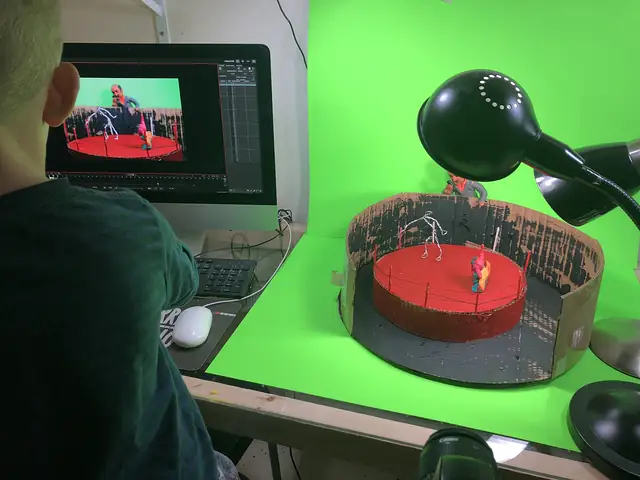
Your own world
A set built from cardboard, paint and tiny props: a kitchen, a jungle, outer space or anything you dream up.

Your own character
Clay sculpted over a bendable wire skeleton, so it can walk, wave, jump and make faces.
A finished film with sound
A 20–40 second short with voices, sound effects, music, a title and credits, ready to premiere for your family.
The coffee cart, made by a student
A student's clay breakfast film. Press play for sound.
My son absolutely loves his classes with Barrett. He talks about it all week!
Jennifer, parent
More from my students
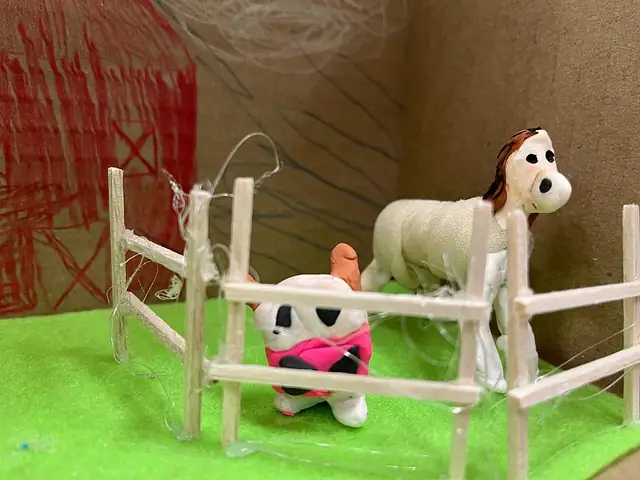
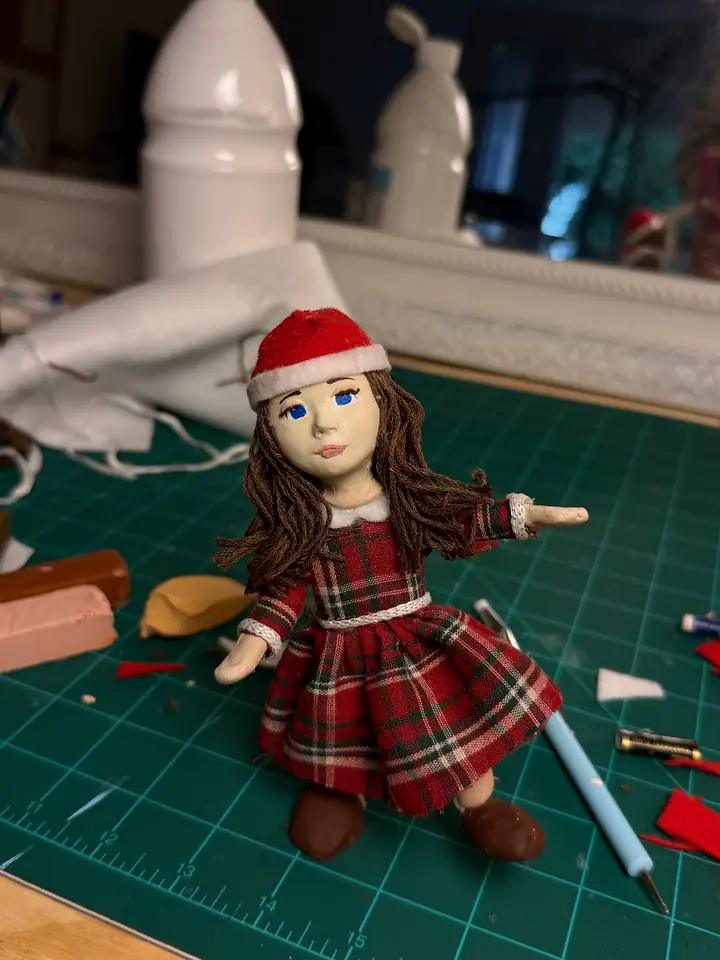
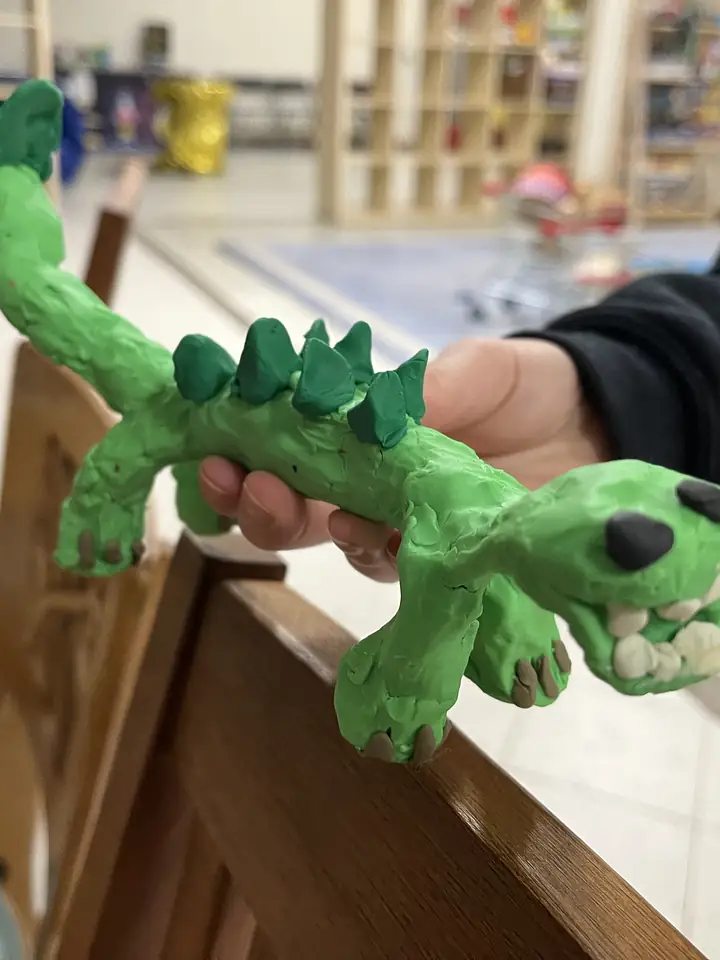
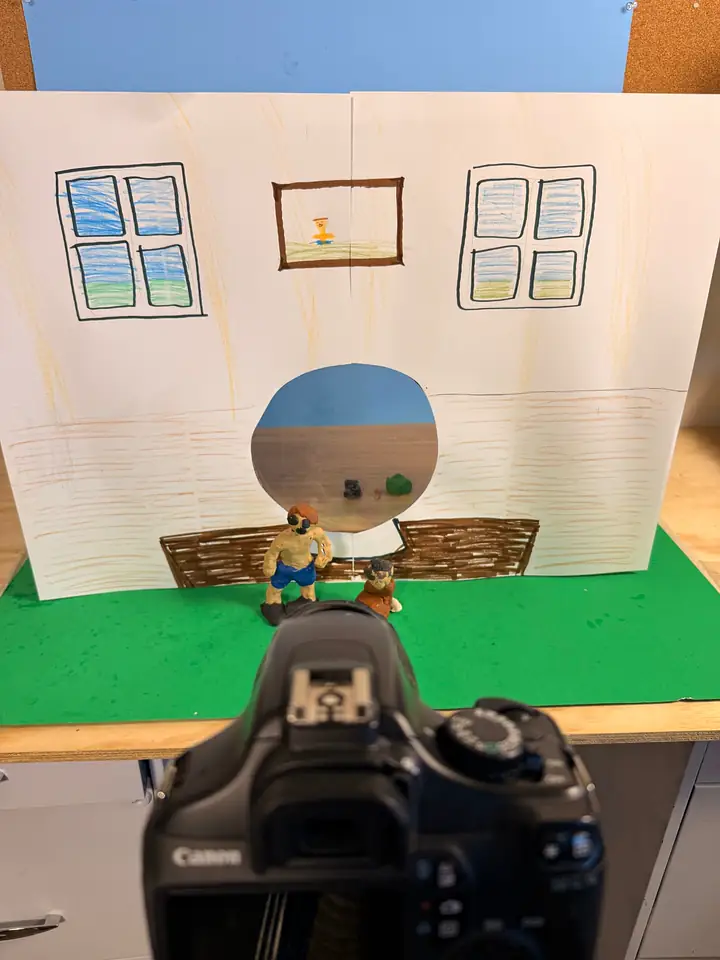
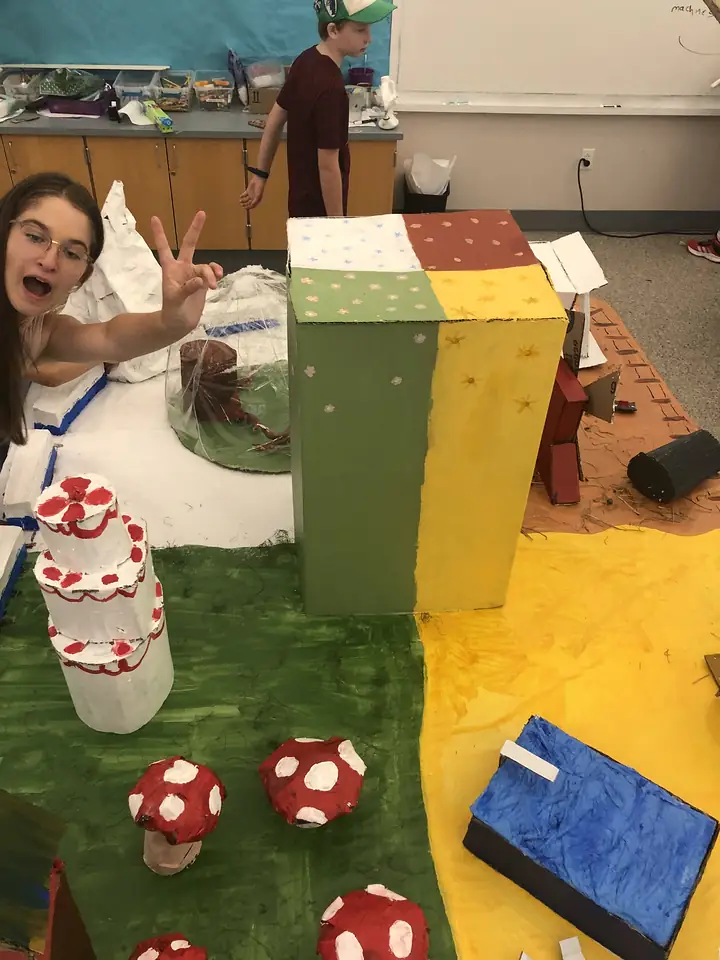
One film, six subjects
Stop-motion is a hands-on way into subjects kids usually meet on a worksheet. Here's which classes cover each one, so you know exactly what your child is practicing.
Sculpture, color and composition
Sculpting a character in clay, painting a set, and framing shots with wide, medium and close-up views.
Classes 4, 6The physics of motion
Gravity, weight and momentum: why a bouncing ball speeds up as it falls and squashes when it lands, and how still pictures trick the eye into seeing motion.
Classes 1, 2, 3Rates, time and measurement
Frame math (12 frames = 1 second), planning a 30-second film as 360 photos, measuring spacing and building sets to scale.
Classes 2, 4, 5Story structure and planning
A beginning, middle and end; a character who wants something; and a storyboard that turns an idea into a shot-by-shot plan.
Class 5Building things that work
Designing a wire skeleton that bends and holds a pose, and a set that stays put for hundreds of photos. Testing, failing and fixing.
Classes 4, 6Voice, sound effects and music
Recording dialogue, making sound effects from everyday things, and choosing music that sets the mood.
Class 8From your first frame to your premiere
Each class builds on the last. We start with quick wins, then build your world and your character, and finish your film. Every class is live with me, one-on-one, for 60 minutes, and ends with something to build or animate before the next one.
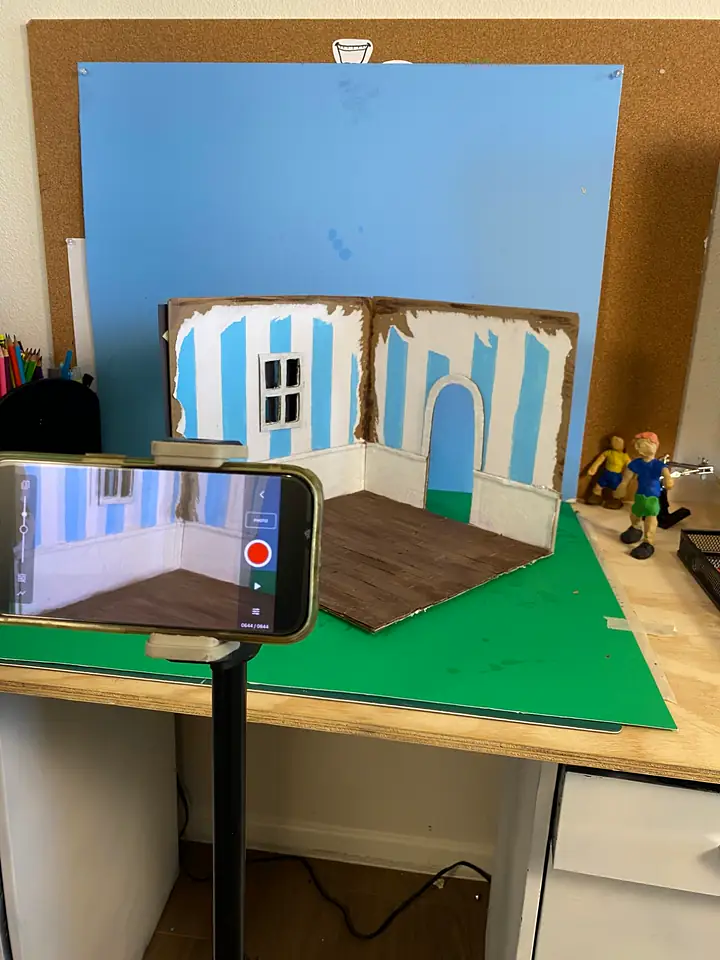
How stop-motion works
Set up a home studio with your phone and a lamp, learn the app, and make your first "magic move".

Movement basics
Animate a bouncing clay ball and learn timing, spacing and squash and stretch, the tricks every animator uses.

Bring objects to life
Turn simple clay shapes into actors: make a clay mug, ball or blob jump, fly, disappear and react in a 5-second scene.

Build your world
Build, paint and light a cardboard set, and frame it with wide shots, medium shots and close-ups.
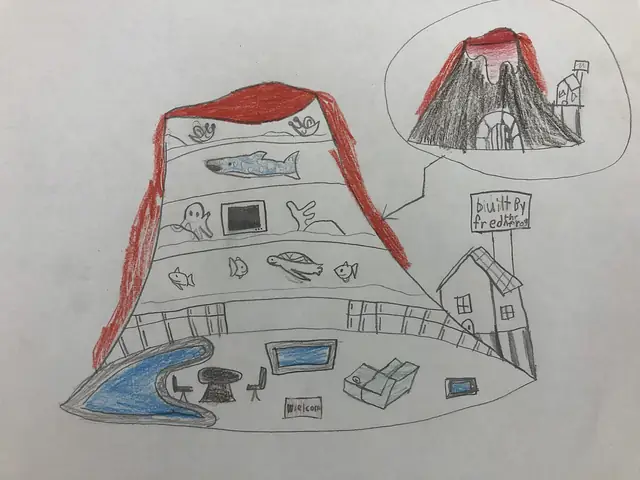
Story and storyboard
Plan a short film with one character, one problem and one surprise, and draw it shot by shot.
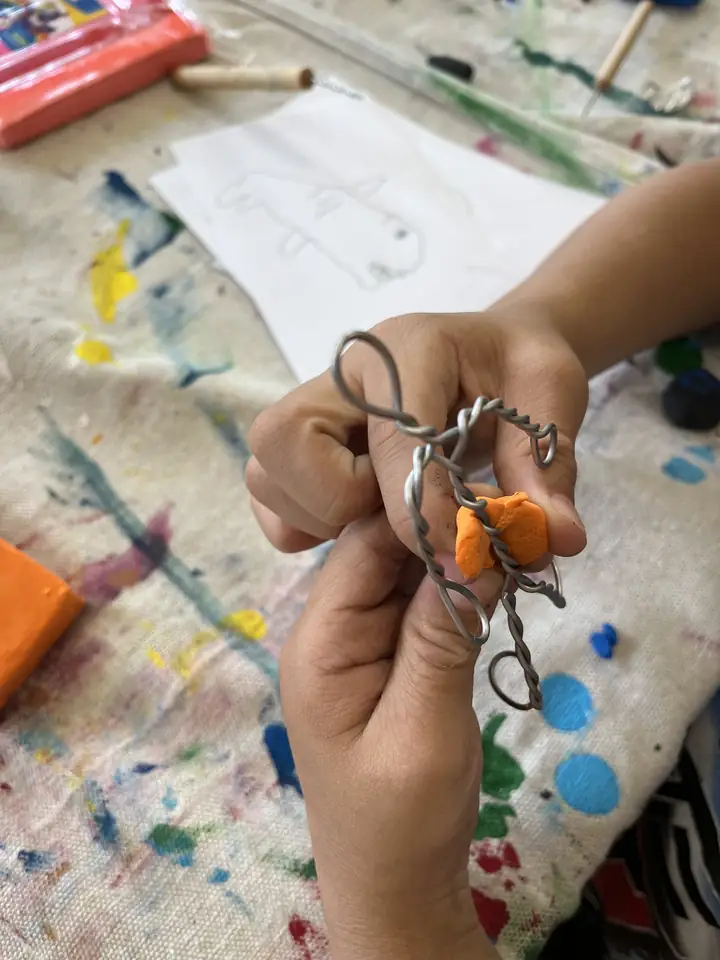
Make your character
Twist a wire skeleton, sculpt your character in clay, and give it faces for every feeling.
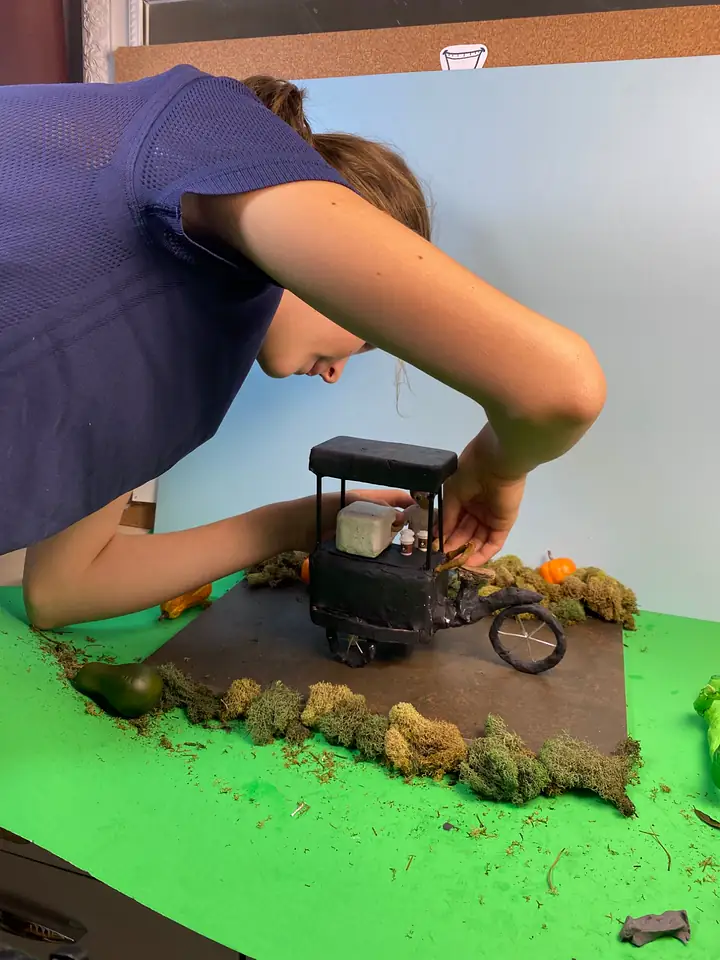
Animate your film
Make your character walk, blink and react, shoot every shot, and put them together.
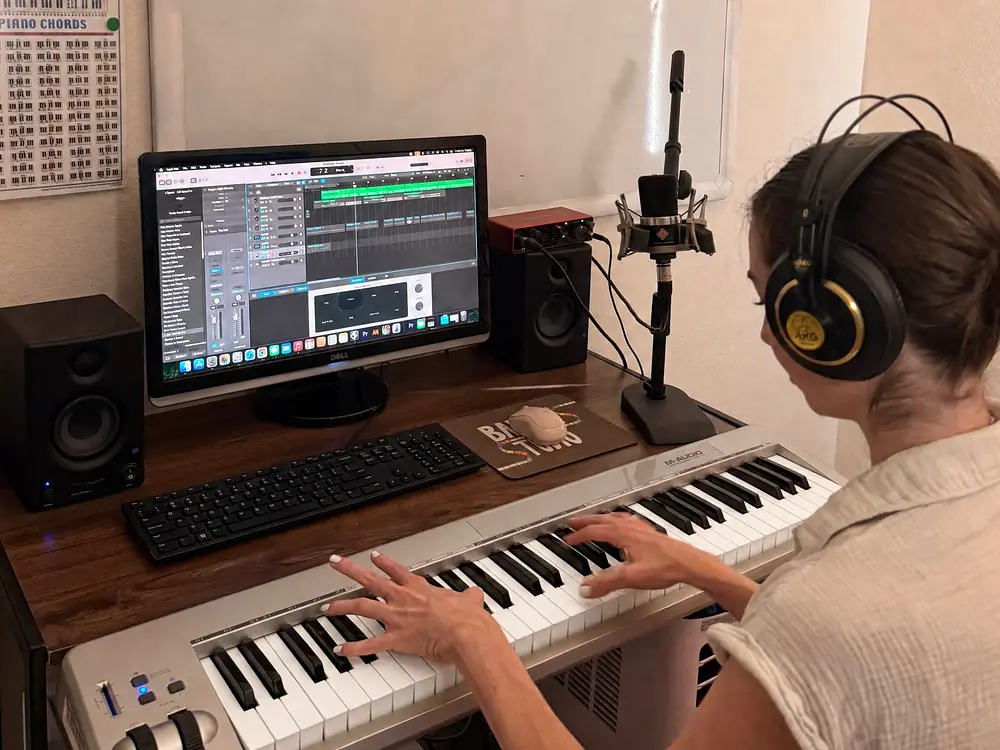
Sound and premiere
Record voices, make your own sound effects, add music and credits, and premiere your film.
Fits your school week and your records
You don't need to know anything about animation. I teach every class live, your child gets feedback from a real animation teacher every week, and the class guides keep everyone on track in between.
A sample week
One class a week, plus about an hour of building and animating before the next one.
| Day | What your child does | Time |
|---|---|---|
| Day 1 | Live class with Barrett: learn the next step and try it together | 60 min |
| Day 2 | Build, sculpt or animate the assignment from class | 45–60 min |
| Day 3 | Finish the assignment and go through the "check your work" list together | 30–45 min |
8 weeks at this pace makes a full quarter. Stretch it to a semester by adding a second film or a family film night.
Easy to keep records
- Learning goals for every class, printed in the class guide
- A "check your work" list for each assignment, so you can see what was mastered
- An hours log covering your live classes and project time
- A certificate of completion with your child's film title
- A finished film for your child's portfolio, plus the storyboard and set photos
- Weekday daytime classes, booked around your school schedule
Book right away
Pick 1, 4 or 8 classes. A single class books right away from your confirmation page. For 4 or 8, I'll email you within 1 business day to set up your class times.
Go at your own pace
One class a week finishes the course in 8 weeks. Book closer together for a summer burst, or space them out alongside other subjects.
Bring the siblings
Brothers and sisters are welcome to join the same class and team up on one film. Younger kids can animate alongside older ones with a little help.
You won't be animating on your own
Every class is a 60-minute, one-on-one video call with me. I teach the next step, watch you try it and help you fix it right there. Send me your latest clip the day before, and we'll pick up right where you are. Three of the classes are big moments for your film:
Studio check
We set up your studio together: point your camera at your setup, fix any wobble or flicker, check your app settings and make your first animation.
Story and character
Pitch me your story. We'll storyboard it into a film you'll love and can actually finish, then plan your character.
Final cut
We'll watch your shots together, fix the one that will make the biggest difference, and plan your voices, sounds and music.

Hi, I'm Barrett
For nearly 15 years I've taught kids computer animation, filmmaking and stop-motion, in my studio in North Scottsdale, in families' homes and online. Stop-motion is the one I love most: it's hands-on, a little magical, and kids are hooked within minutes.
I made this course so you can learn the way my studio students do, from anywhere, with what you already have at home.
A phone, some clay and a cardboard box
You can start Class 1 with what's already in the house. The full list comes when you book.
- Phone or tabletiPhone, iPad or Android
- Something to hold it stillA phone stand, or books and tape
- A desk lampAny lamp you can point
- Oil-based modeling clayThe kind that never dries out
- 2 mm aluminum wireFor your character's skeleton (Class 6)
- Cardboard, paint and glueFor your set (Class 4)
- Tape and poster puttyTo keep everything still
- Small propsBeads, bottle caps, sticks, felt

We animate with the same friendly app my students use in online lessons. It has onion skin (a see-through ghost of your last photo, so you know how far to move), instant playback and built-in sound.
The free version is all you need. The paid Plus upgrade adds green screen and extra sound tools if you want them later.
Start your first film today
Every class is live, one-on-one with Barrett, 60 minutes on a video call. Brothers and sisters are welcome to join the same class.
1 class
One live 60-minute class
- Try stop-motion and make your first moving shot
- Or get help with one step of a film you've already started
- Supply list and class guide
4 classes
$95 a class
- Four live 60-minute classes with Barrett
- A shorter film, or the first half of the course
- Supply list and a printable guide for each class
- Add more classes later
Full course: 8 classes
$90 a class
- All 8 live 60-minute classes with Barrett
- From your first frame to a finished film with sound
- Supply list, a printable guide for each class, and the storyboard and wire skeleton templates
- Learning goals, hours log and certificate for your records
Secure checkout. Paying with ESA funds through ClassWallet, or have a question first? Send me a message.
Questions families ask
What ages is it for?
Ages 8 and up, with no experience needed. Teens and adults love it too. Younger kids, ages 5 to 7, can do it with a grown-up helping, and it's a great project to do together as a family.
Is this a video course?
No. There are no pre-recorded videos. Every class is live, one-on-one with Barrett over video call, so your child gets real feedback on their own film every time.
Should we take 1, 4 or 8 classes?
For a finished film from start to end, take the full course: 8 classes. 4 classes make a shorter film or cover the first half of the course, and you can add more later. A single class is a good way to try stop-motion, or to get help with one step of a film you've already started.
How do the live classes work?
For a single class, you'll get a booking link right after your purchase, on your confirmation page and in your order email. For 4 or 8 classes, I'll email you within 1 business day to set up your class times together; most students meet once a week, often at the same time each week. Each class is 60 minutes, one-on-one on a video call. For students under 18, a parent should be home and nearby during each class.
Does it work for homeschool records?
Yes. Every class guide lists its learning goals and a “check your work” list, and the full course comes with an hours log for your live classes and project time and a certificate of completion. Your child’s finished film, storyboard and set photos make a strong portfolio piece. Requirements vary, so check what your state or program asks for.
What subjects does it cover?
Art and design, science (the physics of motion), math (frame math, timing and scale), writing and storytelling, engineering (building a character skeleton and a set that holds up) and music and sound. The “What your child learns” section shows which classes cover each one.
Do I need to know anything about animation?
No. Barrett teaches every class live, step by step, and gives your child feedback directly, so you can be the helper, not the teacher.
How long does it take?
Most students take one class a week and finish the full course in about 8 weeks. Each class is 60 minutes live with Barrett, plus about an hour of building and animating before the next one.
When can I start?
Right away. A single class books straight from your confirmation page, and for 4 or 8 classes I'll email you within 1 business day to set up your times. You can start Class 1 with a phone, a lamp and a few things from around the house.
Can I pay with ESA funds?
Yes. Barrett's Studio is an approved vendor on ClassWallet. Send me a message with the option you'd like (1, 4 or 8 classes), and I'll send you a ClassWallet invoice and link to pay with your ESA funds.
What devices do I need?
A phone or tablet (iPhone, iPad or Android) with the free Stop Motion Studio app to animate, and a computer or tablet for the video call.
Can brothers and sisters join?
Yes. Siblings are welcome to join the same class and team up on one film. If they each want their own film and Barrett's full attention, book classes for each of them.
We live near Scottsdale. Can we come to the studio instead?
Yes. I teach in-person stop-motion lessons in my North Scottsdale studio and in homes across Scottsdale and Phoenix. See my stop-motion classes.
Your first frame is 30 minutes away
Book your first class, grab a phone and some clay, and start animating with me.
See you on set! – Barrett